
 Albanian
  English
 Galileo 125
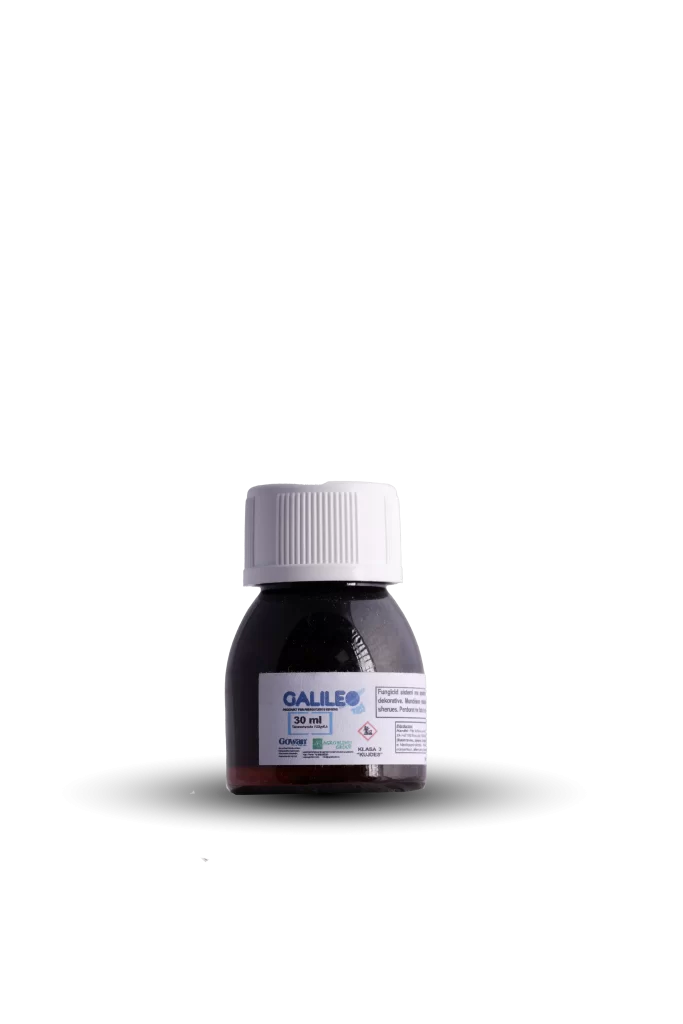
Agroblend Galileo 125 Home Fungicide Product Information on the product Formulation: Water emulsion (EW)Type: Systemic fungicide with a broad spectrum of action. GALILEO 125 EW is a systemic fungicide with a broad spectrum of action, used for controlling diseases in vineyards, fruit trees, vegetables, and ornamental plants. GALILEO 125 EW provides maximum protection against diseases, with different application methods, both preventive and curative. It is used in various vegetative phases, either alone or in combination with other products, depending on the appropriate treatment. Please consult the technical service for advice on specific crops and conditions. Contact Now >> First Aid Instructions and Medical Advice:First Aid Instructions and Advice for the Doctor: • H317: May cause an allergic skin reaction. • H361: Suspected of damaging fertility. • H373: May cause damage to organs through prolonged or repeated exposure. • EUH208: Contains spinetoram and 1.2-benzisothiazol-3(2H)-one. May cause an allergic reaction. • In case of inhalation: Move the person to fresh air. • In case of breathing cessation: Alert emergency services or an ambulance, then administer artificial respiration; to perform mouth-to-mouth respiration, the rescuer should use proper protection (e.g., a pocket mask). • In case of skin contact: Immediately remove contaminated clothing. Rinse immediately with plenty of water for 15-20 minutes. • In case of eye contact: Keep the eyes open and rinse slowly and gently with water for 15-20 minutes. • Remove contact lenses, if present, after the first 5 minutes and continue rinsing the eyes. • P101: If medical advice is needed, keep the container or product label nearby. • P308-P313: If exposed or concerned: Immediately call a poison center or a doctor. • No specific antidote. Symptomatic treatment. Information Additional Information Usage Warning:In areas with historically high infection levels, include the product in a specific pest control program. To reduce the likelihood of resistance phenomena, the product should be included in a strategy that alternates spinetoram-based and spinosad-based products with others that have different mechanisms of action. Do not perform more than two treatments per season. Strictly follow the dosages indicated on the label. Treat in the absence of wind. Phytotoxicity:When used alone, the product does not show phytotoxicity problems. Environmental Impact:– H410: Very toxic to aquatic life with long-lasting effects. Avoid contaminating water with the container or product. To protect aquatic organisms, do not use closer than 20 meters from water surfaces. Avoid cleaning equipment near water surfaces. – P273: Do not pollute the environment.– P391: Collect spillage.– P501: Dispose of the product/container in accordance with local regulations.– SP1: Do not contaminate water with the product or its container.– P501: Dispose of contents/container in accordance with legislation. Do not clean sprayers near surface waters. Avoid contamination via drainage systems. Withdrawal Period:– 3 days for citrus, cherries, and sour cherries.– 7 days for apples, pears, quinces, wild apples, medlar, peaches, nectarines, apricots, plums, figs, blueberries, persimmons, grapes, strawberries, and raspberries.– 14 days for pistachios.– 21 days for olives. Storage Conditions:Store the product in sealed containers, in dry and cool places. The storage temperature should not exceed 35°C. Do not store in direct sunlight or humidity. Information Usage & Dosage Usage:Delegate is based on spinetoram, an active ingredient derived from a bacterium (Saccharopolyspora spinosa) present in the soil and later chemically modified. It is used for controlling a wide range of pests that feed on leaves, including lepidopterans, thrips, leaf miners, and some psyllids that infest various crops. In apples, pears, quinces, medlar, persimmon, pomegranate, and figs: 2 treatments per season are allowed, with an interval of 7-14 days. Against Cydia pomonella, treat at egg hatching with 300-400 g/ha. Against Pandemis spp., Argyrotaenia pulchellana, Archips spp., Adoxophyes spp., treat when eggs hatch or against winter brood larvae with 300-400 g/ha. Against peach borer (Cydia molesta), treat near harvest time with 300-400 g/ha. Against Leucoptera scitella, Phyllonoricter spp., treat at the hatching of the first eggs with 350-400 g/ha. Against Psylla pyri, treat at the yellow egg stage with 400 g/ha. The product has a good effect against Cacopsylla melanoneura, which may be present when treating the main pests. In peaches, nectarines, apricots, plums, cherries, and sweet cherries: 2 treatments per season are allowed, with a 28-day interval. Against peach borer, Anarsia lineatella, and Cydia funebrana, treat at egg hatching with 300-400 g/ha. Against thrips (Thrips meridionalis, Thrips major, Frankliniella occidentalis), treat at the first appearance of the pest with 300-400 g/ha. Against Asian fruit fly (Drosophila suzukii), treat at the appearance of the pest with 300-400 g/ha. The product also has a good side effect against Ceratitis capitata. In olives: 2 treatments per season are allowed, with a 28-day interval. Against olive borer (Prays oleae) and (Philaenus spumarius), treat when the pest is present with 75 g/ha. In citrus: 2 treatments per season are allowed, with 300-400 g/ha, at a 7-14 day interval. Against psyllids, leaf miners, leaf curlers, and citrus thrips (Scirtothrips citri), use with 800 g/ha/season. Do not use in greenhouse citrus. In vineyards: 2 treatments per season are allowed. Against grapevine borer and thrips, treat at egg hatching with 250-300 g/ha. In pistachios: 1 treatment per season is allowed. Against Agonoscena sp., treat at the appearance of the pest with 100 g/ha. In strawberries, raspberries, blackberries, blueberries: 2 treatments per season are allowed. The doses refer to a solution of 1200-1500 liters/ha. Against Cydia pomonella, treat at egg hatching with 300-400 g/ha. Against Pandemis spp., Argyrotaenia pulchellana, Archips spp., Adoxophyes spp., treat when eggs hatch with 300-400 g/ha. Against peach borer, treat near harvest time with 300-400 g/ha. For all crops, use 1000-1500 liters of solution/ha. Information Preventive Measures • P102: Keep out of reach of children. • P103: Read the label before use. • P201: Obtain special instructions before use. • P202: Do not handle until all safety precautions have been read and understood. • P281: Use protective clothing. • P405: Store locked up. • EUH401: To avoid risks to human health and the environment, follow the instructions for use. Information Active Ingredients Active Ingredients Spinetoram
Fontelis
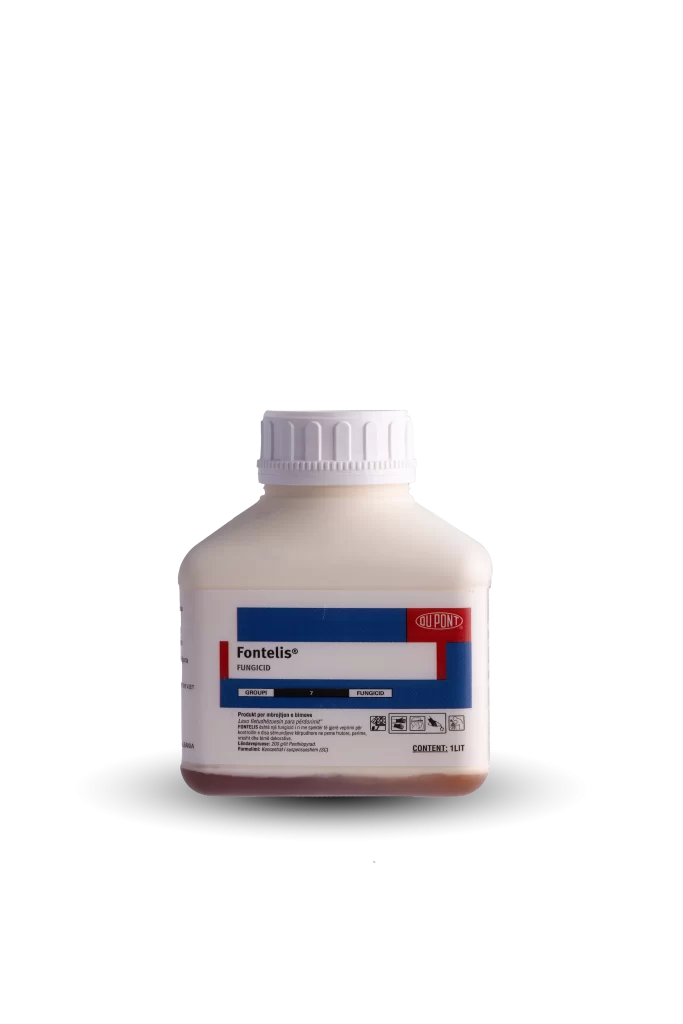
Agroblend Fontelis Home Fungicide Product Information on the product Formulation: Suspensible concentrate (SC)Type: Fungicide with broad spectrum of action FONTELIS is a new fungicide with a broad spectrum of action for controlling various fungal diseases in fruit trees, vegetables, vineyards, and ornamental plants. Please consult the technical service for advice on specific crops and conditions. Contact Now >> First Aid Instructions and Medical Advice: In case of skin contact: Remove contaminated clothing. Rinse immediately with plenty of water. If the person feels unwell or experiences skin irritation, consult a doctor. In case of eye contact: Keep eyes open and carefully rinse with plenty of water, even under the eyelids, for at least 15 minutes. Consult a specialist for treatment advice. In case of inhalation: Move the person to fresh air. If necessary, administer oxygen and mouth-to-mouth resuscitation, if possible. Consult a doctor for further medical advice. In case of ingestion: Drink 1-2 glasses of water. Immediately notify a doctor. Do not induce vomiting unless advised by a doctor. Never induce vomiting or give anything by mouth to an unconscious or convulsing person. – P308-P313: If exposed or feeling unwell: Immediately call a poison center or doctor/physician.– P101: If medical advice is needed, keep the container or product label available.– No specific antidote is known. Symptomatic treatment. Information Additional Information Usage Notes:FRONTELIS is compatible with many pesticides, liquid fertilizers, and biological products. Avoid mixing in the sprayer tank unless recommended on the label or by experts. To avoid the phenomenon of resistance, treat according to the recommendations. Do not apply under poor weather conditions, in the rain, with wind, or during hours with high temperatures. Do not apply with spraying equipment that is not functioning properly or is damaged. It should be used preventively, treating as soon as favorable conditions for disease development appear, ensuring that the entire vegetative mass is sprayed. Use only suitable spraying equipment. Impact on the Ecosystem:Moderately toxic to mammals and birds. Slightly toxic to bees. H400: Very toxic to aquatic organisms. H410: Very toxic to aquatic life with long-lasting effects. H412: Harmful to aquatic life with long-lasting effects. SP1: Do not pollute water with the product or its container (Do not clean application equipment near surface water/avoid contamination through runoff from gardens and roads). SPe3: To protect aquatic organisms, respect an untreated buffer zone of 10 meters in surface watercourses. Do not apply this product directly or near a water surface and in all other aquatic environments such as ponds, lakes, irrigation channels, drains, etc. Respect distances for protected areas (min. 20 m). P273: Avoid release into the environment. Withholding Period:3 days for vegetables; 7 days for leafy vegetables; 21 days for apples and pears; 3 days for peaches, apricots, and nectarines. Storage and Handling:Store in original containers in dry, cool, and well-ventilated areas, at temperatures between 1-30°C, away from direct sunlight and flammable materials. There is a risk of self-ignition if stored in damp environments. Information Usage & Dosage UsageIn apples, pears: For controlling scab, powdery mildew, alternaria, and brown spots on pears, use 75 ml/100 liters of water. If applied before the end of flowering, use a solution volume of 1000-1200 liters/ha (750-900 ml/ha). Up to 2 treatments per season can be performed, with a 7-day interval. In peaches, nectarines, apricots, plums, cherries, and figs: For controlling Monilia spp. (brown rot) and powdery mildew during flowering, perform 1 single application with 75 ml/100 liters of water; during the fruit development and ripening phase, perform a maximum of 2 applications with 1.5 liters/ha in a solution of 500-1000 liters of water. Up to 2 treatments per season can be performed, with a 7-day interval. In vineyards: For controlling powdery mildew, use 75 ml/100 liters of water in 1000-1200 liters/ha (750-900 ml/ha). Up to 2 treatments per season can be performed, with a 7-day interval. In tomatoes, eggplants: For controlling botrytis and sclerotinia: – In open fields, use 2.4 liters/ha in 500-1200 liters of water; perform 1 application per season. – In greenhouses, use 2 liters/ha in 500-1000 liters of water. Up to 2 treatments per season can be performed, with a 5-day interval. In peppers (in greenhouses): For controlling botrytis, use 2 liters/ha in 500-1000 liters of water. Up to 2 treatments per season can be performed, with a 5-day interval. In pumpkins, cucumbers, melons, squashes, etc.: For controlling botrytis, powdery mildew, and sclerotinia: – In open fields, use 2.4 liters/ha in 500-1200 liters of water; perform 1 application per season. – In greenhouses, use 2 liters/ha in 500-1000 liters of water. Up to 2 treatments per season can be performed, with a 5-day interval. In leafy vegetables (lettuce, spinach, cabbage, arugula, etc.): For controlling botrytis and sclerotinia, use 1.5 liters/ha in 200-1000 liters of water. Perform 1 treatment per season. In Strawberries: For controlling botrytis and powdery mildew, use 1.75 liters/ha in 200-1000 liters of water. Up to 2 treatments per season can be performed, with a 5-day interval. This product can be used as part of an Integrated Pest Management (IPM) program. Consult your extension service or local professionals to determine the infection levels for treatment. Information Preventive Measures • P102: Keep out of reach of children. • P103: Read the label before use. • P201: Obtain special instructions before use. • P202: Do not handle until all safety warnings have been read and understood. • P281: Use protective clothing. • P391: Collect spillage. • P405: Store locked up. • P501: Dispose of contents/container in accordance with local legislation. • EUH401: To avoid risks to human health and the environment, comply with the instructions for use on this label. Information Active Ingredients Active Ingredints Penthiopyrad 200 g/L Information Compatibility FRONTELIS is compatible with many pesticides, liquid fertilizers, and biological products. Avoid mixing in the sprayer tank unless recommended on the label or by experts. Please consult the technical service for additional advice on compatibility. Agroblend Check out our product catalog! For a list of all the products & information on their usage.
Talendo
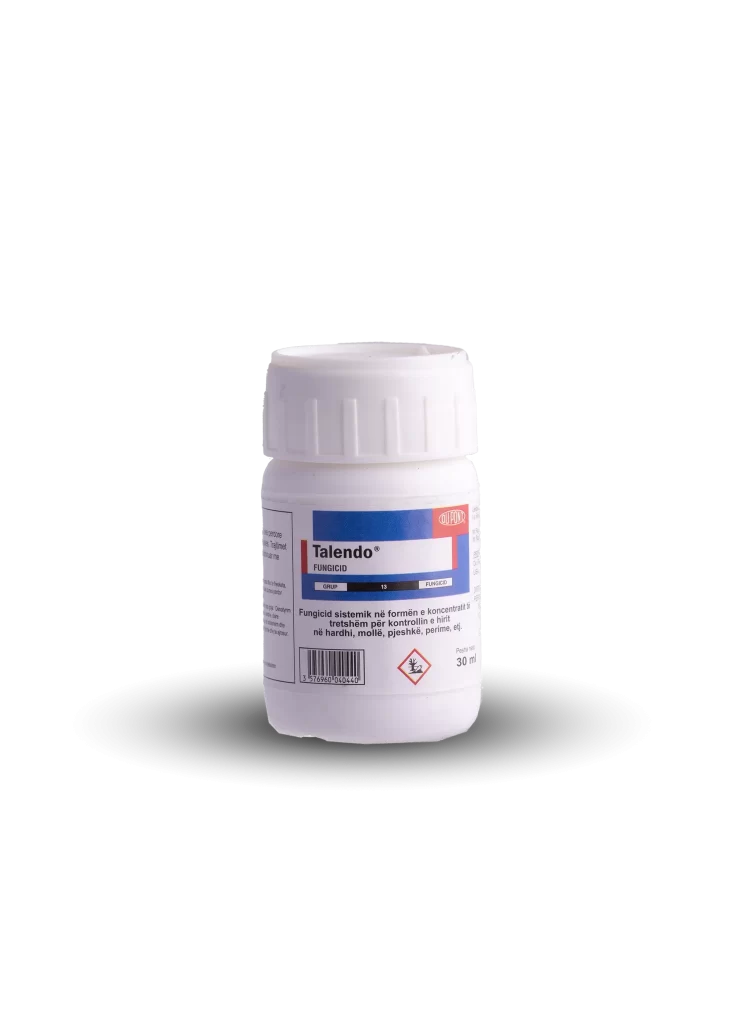
Agroblend Talendo Home Fungicide Product Information on the product Weight: 30mlFormulation: Emulsifiable Concentrate (EC)Appearance: Beige-colored granules TALENDO is a systemic fungicide for controlling grapevine downy mildew. Contact Now >> First Aid Instructions and Advice for the doctor Symptoms in Case of Ingestion:Denaturation of mucosal proteins causing ulcers, liver and kidney damage, central nervous system (CNS) impairment, and hemolysis.Yellow-colored vomiting, hematochezia (bloody diarrhea), abdominal colitis, liver and kidney failure. In Case of Skin or Mucosal Contact:Wash thoroughly with plenty of water and soap. In Case of Inhalation of the Spray Solution:Move the affected person to a warm and ventilated area. Immediate Action:Seek assistance at the nearest hospital and provide the product label to the doctor. Treatment:Symptomatic therapy. No specific antidote is known. Information Additional Information Phytotoxicity:It is not phytotoxic when treatments are carried out as specified on this label. Impact on the Ecosystem:• Toxic to fish. Do not contaminate flowing waters, canals, or reservoirs with the spray solution or packaging. • Toxic to vertebrates. Withholding period:28 days. Storage:Store in its original packaging, in dark, dry, and cool environments, well-ventilated and secure from fire hazards. Information Usage & Dosage Usage: In vineyards for wine and table grapes: for the control of downy mildew, using 0.2 L/ha and 1000 L/ha of solution. Start applications from the beginning of vegetation until 28 days before harvest. Treatments can be repeated every 7 days, but no more than 4 treatments per season. It is used in combination with other fungicides for downy mildew that have a different mode of action. Usage Notes: Compatible with other plant protection products (PPPs).Should not be used during flowering. Information Precautionary Measures: • Keep in a safe place and out of reach of children. • Store in a dry and cool place, away from food, beverages, and animal feed. • Avoid prolonged contact of the product with eyes and skin. • Avoid inhaling the product during the preparation of the spray solution and during spraying. • Do not eat, drink water, or smoke while using the product. • Use protective equipment during work: coveralls, gloves, masks, goggles. • After finishing the work, wash protective equipment, spraying tools, hands, and exposed parts of the body. • Dispose of packaging in accordance with applicable regulations. Information Active Ingredients Active Ingredients Proquinazide 200 gr/lit Information Compatibility Compatible with other plant protection products (PPPs). It is used in combination with other fungicides for downy mildew that have a different mode of action. Please consult the technical service for additional advice on compatibility. Agroblend Check out our product catalog! For a list of all the products & information on their usage. Click here to view >> Tap here to view >> Agroblend Other Products Gardentop Pasta Plus GSP ULTRA Ultra OLIVE (22-6-12 +0.3 Bor) PatentKali 0-0-30 K20+10 MgO +44 SO3 30 %
Neoram WG
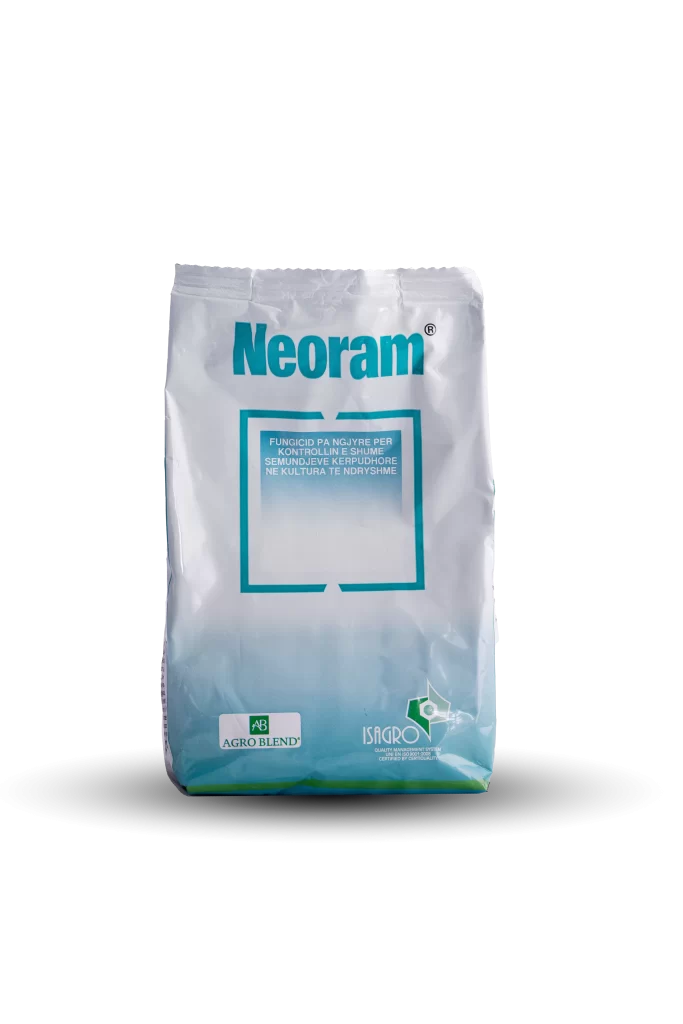
Agroblend Neoram WG Home Fungicide Product Information on the product Formulation: Water-dispersible granules (WG).Type: Protective fungicide with a high copper content and contact action. NEORAM WG is a protective fungicide with a high copper content and contact action. It is used to control several fungal diseases in various agricultural crops, especially in vineyards and vegetables in both greenhouses and open fields. Please consult the technical service for advice on specific crops and conditions. Contact Now >> Information Additional Information Warning for use: It should not be applied during flowering. It should not be mixed with alkaline PMBs or those containing Thiram. Phytotoxicity: In some cultivars of peaches, nectarines, apricots, and certain apple varieties (Abodanza, Golden Delicious, Gravenstein, Jonathan, Stayman, Reneta) and pears (Abate Fetel, Butirra Clairgeau, Passacrasan, William, Favorita di Clapp, Kaiser, Butirra Gifard), it may cause phytotoxicity if used during full vegetation. In these cases, it is recommended to apply when the plant’s lush vegetation begins to fall. However, when treating bacterial diseases, phytotoxicity becomes a secondary issue, and treatments should be carried out as indicated on this label. It is phytotoxic to cucurbits. Impact on the ecosystem: H400: Very toxic to aquatic life. H410: Very toxic to aquatic life with long-lasting effects. Relatively toxic to bees. Harmful to livestock, therefore avoid grazing in areas treated with this product. Withholding period: In vegetables, 3 days; in other crops, 20 days. Storage: Store in dark, cool places in the original packaging at temperatures between 0°C and 35°C. Information Usage & Dosage Use: In fruit trees, both pome and stone fruits: In winter treatments: For pome fruit, to control the winter phases of diseases such as scab, bacterial diseases (Pseudomonas syringae, Erwinia amylovora), and fungal cankers on branches (Nectria galligena, Phomopsis mali, Sphaeropsis malorum); For stone fruits: to control twisted leaves and leaf curl, as well as other fungal diseases. Two preventive treatments are done: one before leaf fall and another during bud swelling. The recommended dosage is 500-600g/100L of water during bud swelling and pink bud stage. In vegetation: Used against the above diseases with a dosage of 200-250g/100L of water. In vineyards: for controlling downy mildew, escoria, black rot, with a dosage of 200-300g/100L of water, and in cases of severe infestations, 250-400g/100L of water, treating throughout the entire vegetative phase, except during flowering. In vegetables (in greenhouses and fields): for controlling mildew, alternariosis, and cladosporiosis, as well as preventing the spread of bacterial diseases like bird eye disease (Corynebacterium michiganense), bacterial necrotic spot (Pseudomonas syringeae), and bacterial black spot (Xanthomonas campestris). Treatments are repeated every 7-10 days depending on climatic conditions and disease intensity. The recommended dosage is 250-350g/100L of water. In citrus: for controlling Pseudomonas syringeae, mal secco, Phytophthora, anthracnose, with a dosage of 250-300g/100L of water. In olives: for controlling olive fly, mildew, with a dosage of 250-350g/100L of water, applying early preventive treatments in spring. In potatoes and tobacco: against downy mildew, with a dosage of 2.5-3kg/ha. In strawberries: against neck rot, with a dosage of 200-300g/100L of water, starting early in the vegetation phase. In ornamental plants: against anthracnose, mildew, rust, bacterial diseases, with a dosage of 200-300g/100L of water, starting early in the vegetation phase. Information Precautionary Measures • Store in dry and cool places, away from food and beverages for humans, as well as feed for livestock. • Avoid inhaling the product while preparing the spray solution and during spraying. • P264: Wash hands immediately with plenty of water. • P270: Do not eat, drink, or smoke during use. • P101: If medical advice is needed, have the product container or label available. • P102: Keep out of reach of children. • P103: Read the label before use. • P280: Wear protective gloves/protective clothing/eye protection/face protection. • P501: Dispose of the contents/container in accordance with applicable regulations. • EUH401: To avoid risks to human health and the environment, follow the instructions for use. • P391: Collect and clean up spills. Information Active Ingredients Active Ingredients Copper oxychloride 50% (metallic copper) 37.5% Information Compatiblity Please consult the technical service for additional advice on compatibility. Agroblend Check out our product catalog! For a list of all the products & information on their usage. Click here to view >> Tap here to view >> Agroblend Other Products NOV@ Diserbone KN Solar Map 12:61:0 Biostar
Kentan DF
Agroblend Kentan DF Home Fungicide Product Information on the product Type: Fungicide with dispersible granules based on copper hydroxide.Formulation: Water-soluble granules (WG). Fungicide with dispersible granules based on copper hydroxide. It effectively combats a wide range of fungal and bacterial diseases affecting various agricultural crops. KENTAN can also be used for the prevention of algae in rice fields and other water surfaces Please consult the technical service for advice on specific crops and conditions. Contact Now >> Information Characteristics Kentan is produced in a new and dedicated factory using “FLUID BED” technology to ensure an unparalleled water dispersibility, resembling almost micro granules without any dust. • Prevents the germination of fungal spores. • Blocks the respiration process of pathogens. • Slows down protein biosynthesis. • Prevents the permeability of fungi. • The formulation is very simple to use and safe. Information Usage & Dosage Dosage per 100L of water and method of use:It is used for foliar spraying. The normal volume of the spray solution is 1500-1800L/ha for fruit trees, 1000L/ha for vineyards, and 600-800L/ha for other crops. In cases of treatments with a smaller spray volume, apply the necessary dosage per hectare. Vineyard: Downy mildew, escoria, black rot, parasitic rust – intervene as a preventative with a dose of 200-300g every 6-8 days, depending on climate conditions, plant development, and infection pressure. Citrus: Citrus cancer, anthracnose, branch dieback, rotting, gomosis, bacterial diseases – intervene monthly starting from the end of January with a dose of 200-300g. Apple, Pear, Quince: Scab – intervene with a dose of 200-300g before flowering and after the fruiting phase, depending on climate conditions, vegetative development, and infection pressure. Monilia, stone fruit cancer – intervene after complete leaf drop and at the bud swelling stage with 500-1000g. Neck rot – 300g using 10-15 liters of solution per plant. Peach, Nectarine, Apricot, Plum, Almond: Monilia, scab, branch cancer, rotting – winter treatments with a dose of 500-1000g, spring-summer treatments with a dose of 200-300g. Olive: Leaf mildew, downy mildew, trunk cancer, olive fly – intervene at the most suitable time with a dose of 200-300g. Kiwi: Neck rot – 300g using 10-15 liters of solution per plant. Vegetables:Intervene with a dose of 200-300g as soon as favorable conditions for infection development appear: Carrot: Alternaria Garlic, Onion, Shallot: Downy mildew, gray mold, bacterial rot Tomato: Cladosporiosis, fruit rot, downy mildew, black rot, bacterial diseases, gray mold, Alternaria Pepper, Eggplant: Anthracnose, black leg rot, gray mold Melon, Watermelon, Pumpkin, Cucumber: Angular leaf spot, downy mildew, gray mold, bacterial diseases, anthracnose Cabbage: Downy mildew, rot, aphid rot Cauliflower, Fennel, Parsley, Celery: Downy mildew, bacterial diseases Potatoes: Downy mildew, rot, Alternaria. Intervene with a dose of 2-3kg per hectare as soon as favorable conditions for infection development appear and repeat as necessary. Decorative plants, Flowers: Downy mildew, leaf mildew, rust, bacterial diseases – intervene with a dose of 200-300g as soon as favorable conditions for infection development appear and repeat treatments as necessary. Information Active Ingredients Active Ingredients: Metallic copper hydroxide 40% Information Compatibility Please consult the technical service for additional advice on compatibility. Agroblend Check out our product catalog! For a list of all the products & information on their usage. Click here to view >> Tap here to view >> Agroblend Other Products Altacor Nitrophoska Super 20-5-10 (+3MgO+12,5SO₃) Ultra Fert 12-12-17 (+2MgO+234SO₃+TE) Solar Starter 11:40:11+TE
Alial 80 WP
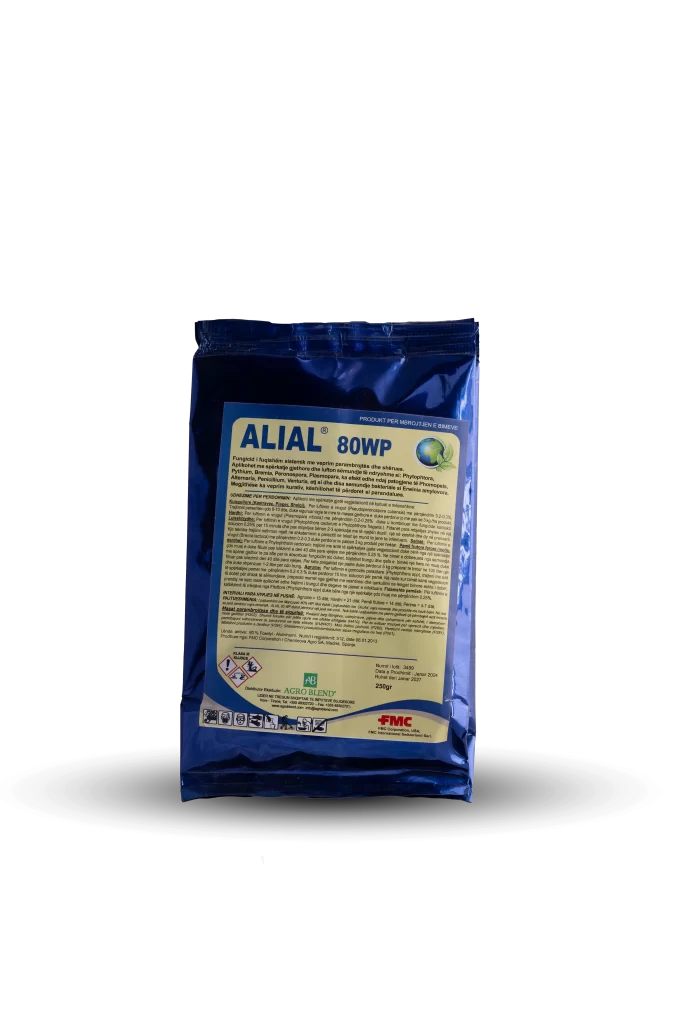
Agroblend Alial 80 WP Home Fungicide Product Information on the product Weight: 0.25kg (250gr)Formulation: Wettable powder (WP)Type: Systemic fungicide with a long-lasting effect A powerful systemic fungicide with preventative and curative action. It is applied as a foliar spray and fights various diseases such as Phytophthora, Pythium, Bremia, Peronospora, Plasmopara, and also has an effect on pathogens like Phomopsis, Alternaria, Penicillium, Venturia, among others, as well as some bacterial diseases like Erwinia amylovora. Although it has curative action, it is recommended to be used preventatively. Please consult the technical service for advice on specific crops and conditions. Contact Now >> Information Additional Information Phytotoxicity: At the recommended doses and on the recommended plants, no signs of phytotoxicity are observed. Usage Warning: Treatments should be performed when there is a risk of infection or based on the data provided by the forecast. Use large volumes of spray solution to ensure good coverage of the leaf mass. It is not compatible with mineral oils and copper-based products. If mineral oils have been used, wait one week before applying. It is not compatible with foliar fertilizers containing mineral nitrogen. Environmental Impact: Harmful to aquatic organisms: may cause long-term effects in the aquatic environment. This material and its packaging should be disposed of safely. Do not contaminate water bodies with the product or its containers. Do not clean spraying equipment near surface waters. Avoid contamination through runoff. Withholding Period: – Citrus: 15 days– Grapevines: 21 days– Fruit trees: 14 days– Vegetables: 4-7 days Storage: Store in a dry, well-ventilated, dark place, in the original packaging. Information Usage & Dosage Apply as a foliar spray during the vegetation period on the following crops: Cucurbits (cucumber, melon, watermelon): For the control of downy mildew (Pseudoperonospora cubensis), use 0.2-0.3%. Repeat treatments every 8-10 days, ensuring good coverage of the leaf mass, using no less than 3 kg/ha of product. Grapevines: For the control of downy mildew (Plasmopara viticola), use 0.2-0.25% combined with contact fungicides. Strawberries: For the control of downy mildew (Phytophthora cactorum and Phytophthora fragaria). Seedlings should be dipped in a 0.25% solution for 15 minutes before planting. After planting, carry out 2-3 sprays with the same dosage: one in the fall and two in the spring. This treatment technique helps significantly in destroying the parasite in potentially infected soils. Lettuce: For the control of downy mildew (Bremia lactuca), use 0.2-0.3%, applying at least 3 kg of product per hectare. Pome fruit trees (apple, pear): For the control of Phytophthora cactorum: apply as a foliar spray during the vegetation period, making one spray every month, starting after flowering and up to 40 days before harvest, using 0.25%. In weakened plants due to disease, where the leaf apparatus is unable to absorb the fungicide properly, treat the trunk and base of the plant once a month starting after flowering and up to 40 days before harvest. Prepare a paste using 5 kg of product dissolved in 100 liters of water and apply 1-2 liters per trunk. Citrus: For the control of parasitic gummosis (Phytophthora spp.), use 0.2-0.3%, applying 10 liters of solution per tree. In cases where plants have poor vegetation due to diseases, the fungicide is poorly absorbed by the leaves, and circulation within the plant fluids is weak. In these cases, trunk and branch treatments are also applied to the infected parts. Fruit tree nurseries: For the control of root rot caused by Phytophthora (Phytophthora spp.), make one spray every month, using 0.25%. Information Precautionary Measures • Keep in safe and out-of-reach places from children. • Store in dry and cool places, away from food and drinks for humans and animal feed. • Use protective equipment during work: coveralls, gloves, mask, glasses. • Avoid contact with eyes and skin with the product. • Avoid inhaling the vapor of the product through the respiratory system during the preparation of the spray solution and during spraying. • Do not eat or drink water or smoke while using the product. • After work, wash protective equipment, spraying tools, hands, and exposed body parts. • Dispose of the packaging according to the applicable regulations. Information Composition Composition Fosetyl-al 80% (800 gr/kg) Information Compatibility Please consult the technical service for additional advice on compatibility. Agroblend Check out our product catalog! For a list of all the products & information on their usage. Click here to view >> Tap here to view >> Agroblend Other Products Ipogreen Coragen Entec Perfect 14-7-17 (+2MgO+22SO₃) Biostar
Fantic F WG
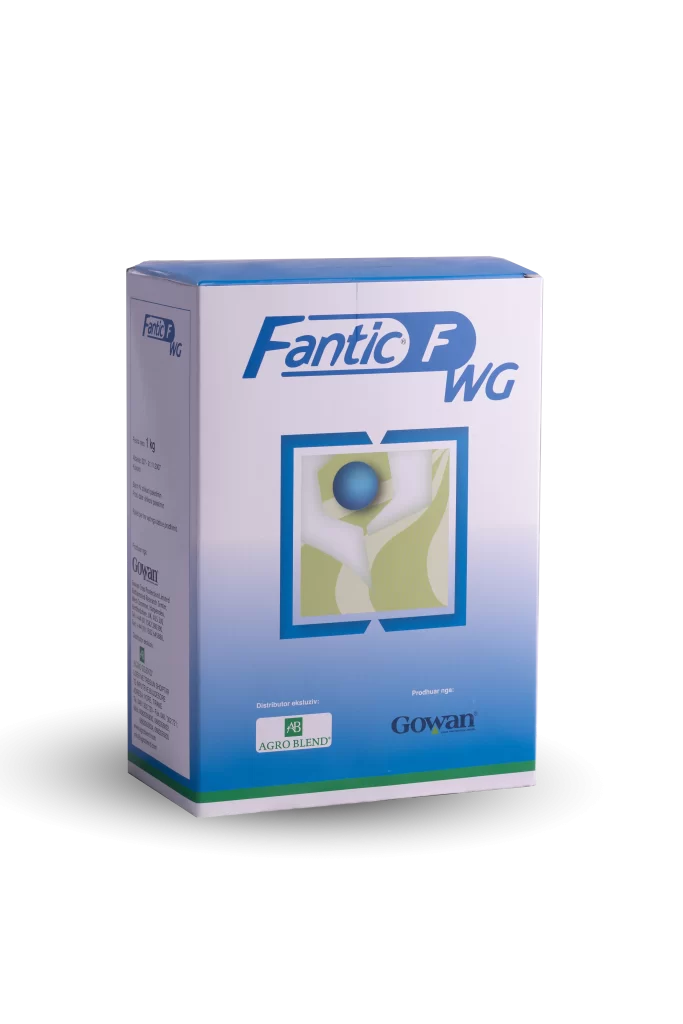
Agroblend Fantic F WG Home Fungicide Product Information on the product Weight: 1kgType: Systemic and contact fungicideFormulation: Water-dispersible granules (WG)Appearance: Light brown granules. Systemic and contact fungicide, used for controlling downy mildew in vineyards, potatoes, tomatoes, cucumbers, and other vegetables. Please consult the technical service for advice on specific crops and conditions. Contact Now >> Information Additional Information Usage note:It can be mixed with other products except those with an alkaline reaction. It can also be mixed with biostimulants and foliar fertilizers. Phytotoxicity:It should not be applied during flowering. For ornamental plants and flowers, it is recommended to perform tests to check sensitivity. Environmental impact:It is not harmful to bees. It is harmful to fish, so do not contaminate water with this product or its packaging. Waiting period:20 days for all crops. Information Usage & Dosage • In vineyards: For the control of downy mildew, treat with 200-250 g of product. • In potatoes: For the control of downy mildew, use 200-250 g of product. • In tomatoes: For the control of downy mildew, use 200-250 g of product. • In onions: For the control of downy mildew, use 250-300 g of product. • In ornamental plants and flowers: For the control of downy mildew, use 200-250 g of product. The product should be stored in dark, dry places, at temperatures up to 35°C. Information Precautionary measures • Keep it in safe and inaccessible places for children. • Store in dry and cool places, away from food and drinks for humans and animal feed. • Avoid prolonged contact of eyes and skin with the product. • Avoid inhaling the product during solution preparation and spraying. • Do not eat or drink water or smoke while using the product. • Wear protective equipment: overalls, gloves, mask, goggles during work. • At the end of work, clean protective equipment and spraying tools. • After finishing work, wash hands and exposed parts of the body. • Dispose of packaging according to the applicable regulations. Information Active Ingredients Active Ingredients Folpet 48% Benalaxil-M 4% Information Compatibility It can be mixed with other products except those with an alkaline reaction. It can also be mixed with biostimulants and foliar fertilizers. Please consult the technical service for additional advice on compatibility. Agroblend Check out our product catalog! For a list of all the products & information on their usage. Click here to view >> Tap here to view >> Agroblend Other Products Delegate HELENA Urea ( 40% N + l4 SO₃) Fontelis Entec 21
Curame 25WG
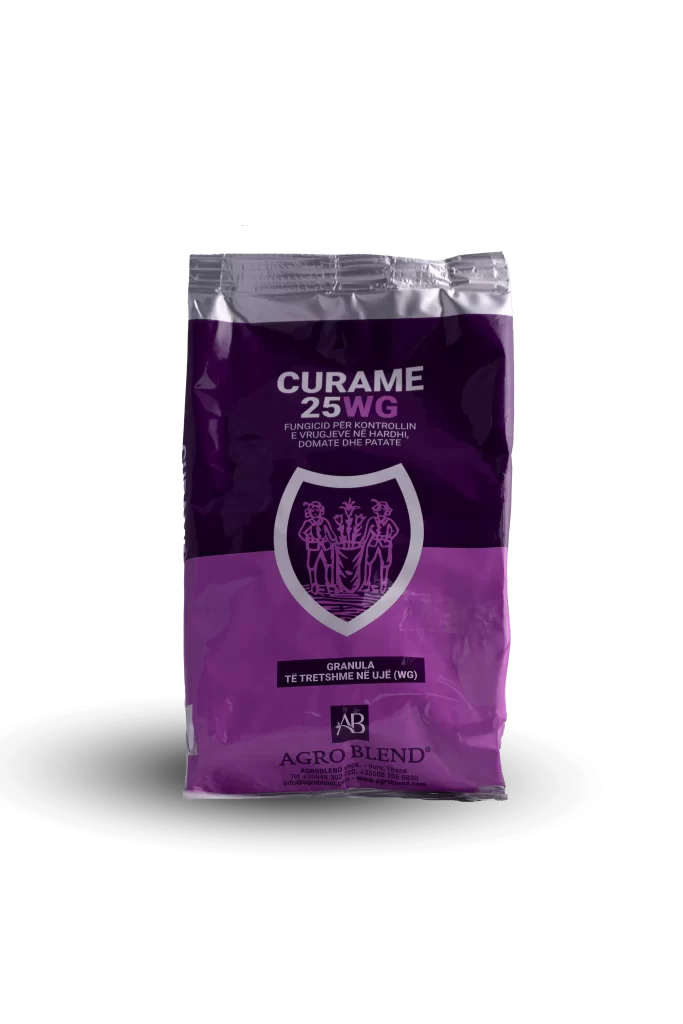
Agroblend Curame 25WG Home Fungicide Product Information on the product Weight: 1kgType: Fungicide for controlling mildew in grapes, tomatoes, and potatoes.Formulation: Water-soluble granules (WG). Fungicide in the form of water-soluble microgranules for controlling mildew in grapes, tomatoes, and potatoes. This product can be used as part of an IPM program, which may include biological control, cultural practices, and genetic methods aimed at preventing pests and diseases. Please consult the technical service for advice on specific crops and conditions. Contact Now >> Information Ecosystem Impact Low toxicity to mammals, birds, and bees. H410: Very toxic to aquatic life, causing long-term harmful effects. SP1: Do not contaminate water with the product or its container (do not clean application equipment near surface water/avoid contamination via runoff from gardens and roads). SPe3: To protect aquatic organisms, maintain an untreated buffer zone of 10 m from surface water bodies. Do not apply this product directly or near a water surface and in all other aquatic environments such as ponds, lakes, irrigation channels, drainage systems, etc. Respect distances for protected areas (min 20 m). P273: Avoid release into the environment. During application, avoid situations with strong wind. Information Usage & Dosage Grapes: For controlling mildew, use 250-300 g/100 liters of water (2.5-3 kg/ha). It is more effective when used for preventive purposes or in the early stages of infection (usually 2-3 days after rain) before symptoms become visible on the plant. Application can begin before flowering. Up to 4 treatments per season can be applied, with 8-10 day intervals. Do not treat during flowering. Potatoes, tomatoes: For controlling mildew, use 280-300 g/100 liters of water (2.5-3 kg/ha). Up to 5 treatments per season can be applied, with 8-10 day intervals. Cucurbits (cucumbers, melons, etc.): For controlling mildew, use 280-300 g/100 liters of water (2.5-3 kg/ha). Up to 4 treatments per season can be applied, with 8-10 day intervals. To avoid the phenomenon of resistance, apply according to recommendations. Do not apply under bad weather conditions, in the rain, with wind, or during hours with high temperatures. Do not apply with spraying equipment that is not functioning properly or is damaged. Apply a sufficient solution per hectare to ensure proper coverage of the treated crops. Only use equipment suitable for spraying. Information Additional Information Withholding period:10 days for tomatoes and cucurbits; 14 days for table grapes and potatoes; 28 days for wine grapes. Storage and handling:Keep in the original containers, sealed in dry and well-ventilated areas, away from sunlight. Avoid using high-pressure water (risk of contamination). Phytotoxicity:Should not be applied to plants suffering from stress due to drought, excess water, low temperatures, insect attacks, lack of fertilization, lime, or other factors that hinder plant growth. If used according to the recommendations provided here, it is not phytotoxic to plants. Do not use on sensitive varieties. Information Active Ingredients Active Ingredients Cymoxanil 42 g/kg Metallic Copper. 250 gr/kg (expressed as copper oxychloride). 397.5 gr/kg Information Compatibility Please consult the technical service for additional advice on compatibility. Agroblend Check out our product catalog! For a list of all the products & information on their usage. Click here to view >> Tap here to view >> Agroblend Other Products Nitrophoska Super 20-5-10 (+3MgO+12,5SO₃) Delegate Solar Universal 19-19-19 Kentan DF
Chemol
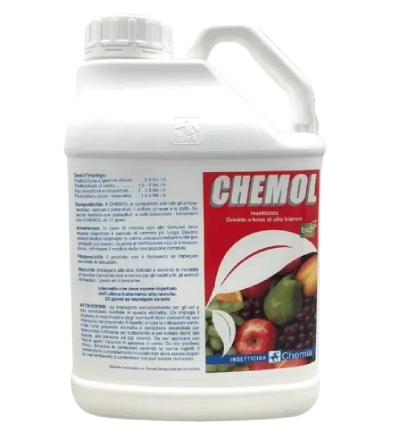
Agroblend Chemol Home Organic Protection Product Information on the product Type: Insecticide – ovicide based on white oil. Allowable for use in organic farming Chemol is an insecticide-ovicide in the form of an oil emulsion, for spring-summer use to combat snails, aphids, psyllids, and spider mite eggs on fruit trees, citrus, olives, and ornamental plants. Please consult the technical service for advice on specific crops and conditions. Contact Now >> Information Characteristics • Active substance: Mineral oil 80%• Formulation: Emulsion, water in oil (EO) Information Usage & Dosage • Fruit trees, in the closed bud stage, with 2-3 liters/100 liters of water. Controls psyllids, aphids, snails, and spider mite eggs. Waiting period: 20 days. • Fruit trees, in the vegetative stage, with 1.5-2 liters/100 liters of water. Controls mites, aphids, snails, and psyllids. Waiting period: 20 days. • Citrus and olives, with 2-2.5 liters/100 liters of water. Controls mites, aphids, snails, and psyllids. Waiting period: 20 days. • Ornamental plants (roses, oleanders), with 1.5-2 liters/100 liters of water. Controls aphids, snails, psyllids, and spider mite eggs. Information Compatibility CHEMOL is compatible with all pesticides, except for polysulfides, copper sulfate, and sulfur.For plants treated with polysulfides or sulfur, maintain a 15-day interval between treatments with CHEMOL. Caution:In case of mixing with other formulations, the longest waiting period must be followed. The preliminary rules described for more toxic products must also be adhered to. In case of poisoning, inform the doctor about the mixture used. Please consult the technical service for additional advice on compatibility. Agroblend Check out our product catalog! For a list of all the products & information on their usage. Click here to view >> Tap here to view >> Agroblend Other Products Sumialpha 5EC Nitrobor Terraflex Starter 11-40-11+2MgO+TE Closer
SARMIN maKSi®

Agroblend Sarmin maKSI Home Organic Protection Product Information on the product Type: Fertilizer product used during the cultivation of: cereals, oilseeds, corn, beets, vegetables.Weight: 0.5L (0.67kg) Sarmin Maksi is used as a fertilizer with a special action, containing silica, through foliar spraying for various crops. Please consult the technical service for advice on specific crops and conditions. Contact Now >> Information Characteristics • Increases the efficiency of water management in plants.• Has a positive effect on plants, improving their resilience to stress.• Contains high levels of potassium and silicon – 100% water-soluble ingredients. The inclusion of silicon in the cellular structures also hardens the stem (stalk), making it more difficult for pests to feed and reducing the level of infection from pathogens (whitefly, absolute thrips, etc…). SARMIN Maksi has a positive effect on water management through the synergistic effect of silicon and potassium in the leaves. Information Usage & Dosage It is applied through spraying with surface application. The recommended amount of the spray solution is 200-300 L/ha. Perform 2-3 sprays during the early stages of plant growth. Recommended fertilizer dose per application: 0.5 L/ha. Do not use if the plants are frozen. Crops: cereals, oilseeds, corn, beets, and vegetables Information Compatibility It should not be mixed with plant protection products. Please consult the technical service for additional advice on compatibility. Information Composition Composition SiO2 min 26% K2O min 12% Agroblend Check out our product catalog! For a list of all the products & information on their usage. Click here to view >> Tap here to view >> Agroblend Other Products Nixon Extra 040 OD Galileo 125 Fantic F WG Delegate